Maker Reviews & Recommendations
Special Effect 3D Printer Build Plates: PEO, PET and PEY Guide
Notes and Details
Affiliate disclosure: this guide contains affiliate links. If you buy through one, Pink Marshmallow Studio may earn a commission at no extra cost to you. Helen only recommends tools she has actually tested on her own printers — the cats supervise, harshly.
If you have ever popped a 3D print off the bed and thought the flat, matte bottom looked a bit boring, special effect build plates are exactly what you need. Instead of standard flat or roughly textured bottoms, these plates imprint stunning visuals directly onto the first layer of your print — from geometric diamond patterns to shimmering, holographic stars. The best part? It takes zero extra post-processing, painting, or sanding. Here is everything you need to know about special effect build plates, how they work, and how to choose the right one for your next project.
From the workbench: Helen here. I test every plate in this guide on real prints — coasters, charms, enclosures, gifts. Charlotte (our tuxedo princess) approves only the shiniest bottoms. Mr Socks gives one slow blink when a first layer goes down perfectly. That is basically a five-star review.
How do special effect build plates work?
It feels like magic, but it is micro-engineering. When your 3D printer extrudes hot filament onto the build plate, the molten plastic squishes into the microscopic textures etched into the bed surface.
For plates with carbon fiber or geometric patterns, the plastic simply takes on the physical mold of the plate. For holographic plates, the science goes a step further. These plates use a diffraction-grating surface — millions of tiny grooves that bend and scatter light waves. When you peel the plastic off, it keeps those microscopic grooves, creating a prism-like iridescent sheen that shifts colour as you move it in the light. There is zero pigment or dye involved.
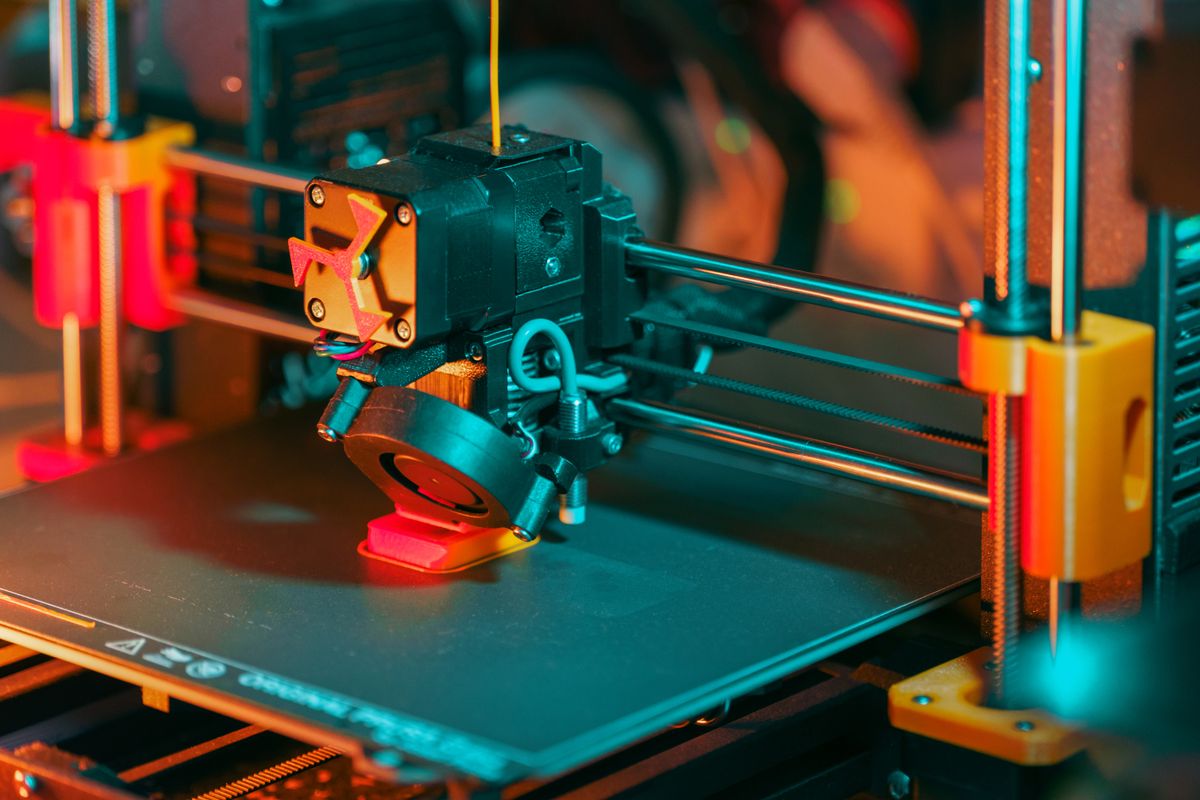
The 4 plates that actually matter: PEO vs PET vs PEY vs textured PEI
Standard PEI (polyetherimide) is the rugged, high-temperature workhorse of 3D printing. The newer PEO, PET, and PEY plates are where the fun happens. Here is how they break down, tested in a real home studio.
1. PEO plates — geometric and low-poly
PEO surfaces carry sharp, repeating geometric designs, most commonly a low-poly triangle or diamond pattern. When light catches the bottom of your print, the alternating triangles reflect at different angles, creating a modern 3D illusion on a perfectly flat surface.
- Best for: tech gadgets, architectural models, coasters, and modern aesthetic pieces.
- Pairs beautifully with: matte PLA and silk PLA in dark colours, where the pattern contrast pops.
- Helen's take: the safest first special-effect plate. Charlotte calls it "acceptable geometry". High praise.
2. PET plates — faux carbon fiber
PET plates imitate the woven, cross-hatched look of real carbon fiber. It adds no structural strength the way real carbon-fiber filament does, but it gives prints a sleek, industrial, premium finish straight off the bed.
- Best for: drone parts, electronic enclosures, automotive accessories, and functional brackets.
- Pairs beautifully with: black or dark-grey PLA for that genuine woven-carbon look.
- Helen's take: my pick for gifts for engineers. It makes a simple box look expensive.
3. PEY / H1H plates — holographic and starry
PEY plates are the showstoppers. Etched with starry nights, constellations, or tiny reflective circles, they use light diffraction so the bottom of your print shimmers with rainbow colours depending on your viewing angle. The effect is striking, especially with silky or glossy filaments.
- Best for: toys, cosplay gems, jewellery, display pieces, and gifts.
- Pairs beautifully with: silk, rainbow, or glossy PLA — the shimmer stacks with the filament shine.
- Helen's take: Mr Socks fell asleep watching one rotate in the light. The highest calm-rating in the studio.
- Get the exact one Helen uses: HIKUDIY H1H double-sided plate (Light Beam + Phantom, 257×257 mm for Bambu Lab) — fits the Bambu Lab X1, P1 and A1 series.
4. Textured PEI — the reliable baseline
Not a special-effect plate in the same way, but worth keeping on hand. Textured PEI leaves a rugged, matte, stippled finish that hides first-layer imperfections and layer lines beautifully.
- Best for: everyday printing, functional parts, and high-temperature materials like ABS, ASA, and nylon.
- Helen's take: keep one mounted for workhorse prints and save the pretty plates for showpieces.
Comparison guide: which plate for which filament?
| Plate type | Visual effect | Best materials | Max temp | Care |
|---|---|---|---|---|
| PEO | Low-poly triangles / diamonds | PLA, TPU, PETG with brim | ~120°C | Wash with soap, wipe with IPA |
| PET | Carbon-fiber weave | PLA, TPU, PETG with brim | ~120°C | Wash with soap, wipe with IPA |
| PEY | Holographic, rainbow, starry | PLA, TPU | ~120°C | Wash with soap, wipe with IPA |
| Textured PEI | Rugged matte stipple | PLA, PETG, ABS, ASA, nylon | High (100°C+) | Wash with soap, wipe with IPA |
How to use special effect plates without ruining them
PEO, PET, and PEY plates need gentler handling than standard PEI sheets. Protect the microscopic pattern and it will keep paying you back in gorgeous first layers.
- Stick to the right materials. These plates are designed for PLA and TPU. PETG can fuse permanently and tear the delicate pattern off, and high-temp filaments like ABS or nylon belong on your standard PEI plate.
- Do not use glue. Glue stick or hairspray fills in the microscopic grooves and kills the visual transfer. Print bare.
- Clean gently. Finger oils are the enemy of adhesion. Wash with warm water and plain dish soap, or wipe gently with high-purity isopropyl alcohol (IPA). Never use steel wool or abrasive scrapers — they scratch the diffraction grating away.
- Let it cool completely. Never pry a print off while hot. Let the bed drop below 35°C so the metal contracts and the part releases on its own. If needed, flex the spring-steel sheet gently.
Which one should you buy first?
- One-plate starter: PEO geometric. Works with the most filaments and suits the most models.
- Gift-mode: PEY holographic. Nothing beats handing someone a trinket that rains rainbows.
- Workshop credibility: PET carbon fiber. Enclosures and brackets instantly look professional.
- Already own one pretty plate? Add textured PEI as your daily driver so the pretty ones stay pristine.
Helen's tested pick: the HIKUDIY H1H double-sided build plate (Light Beam + Phantom, 257×257 mm for Bambu Lab) — more plate picks are being added to this guide. Meanwhile, browse the studio shop for finished prints made on these very plates.
Special effect build plates: FAQ
Will PETG work on PEO, PET, or PEY plates?
Sometimes, with a brim and release agent recommended by the manufacturer — but PETG bonds aggressively and can rip the pattern off. Helen prints PETG on textured PEI instead.
Does the holographic effect fade?
The grooves live in the plastic, not a coating, so the effect lasts as long as the surface stays unscratched. Store display pieces out of direct abrasion.
Can I use glue or hairspray for adhesion?
No — on effect plates, adhesives fill the micro-texture and flatten the effect. Clean the plate properly instead and print bare.
What size plate do I need?
Match your printer bed exactly (common sizes include 220×220, 235×235, 257×257, and 350×350 mm). A plate that overhangs the magnetic base heats unevenly. The linked H1H pick above is the 257×257 mm size for Bambu Lab machines.
Pink Marshmallow Studio is a real home studio: Helen designs and prints, Charlotte judges, Mr Socks naps through quality control. If a plate survives all three of us, it earns a place in this guide.
This recommendation includes an affiliate link. If you buy through it, the studio may earn a commission at no extra cost to you.